There is a saying that I heard from my mother. In Korean she stated, “There is an order in which we come into this world, but there is no order going out”. That stuck with me. Therapists like me are human just like you. We are just as susceptible to life’s challenges. I too can’t escape the fate of death as grief and loss has been a frequent visitor at my front door.
This past week, a very close family friend and father figure died due to a massive stroke while running. He was healthy for this age and the doctor stated that he had a very healthy brain. This is because he was an educator, coach, learner, world traveler, and an advocate. Seeing the image of him in critical condition sent me back in time from when I lost so many members within my close circle.
I found a couple of other quotes related to grief and loss and they stated:
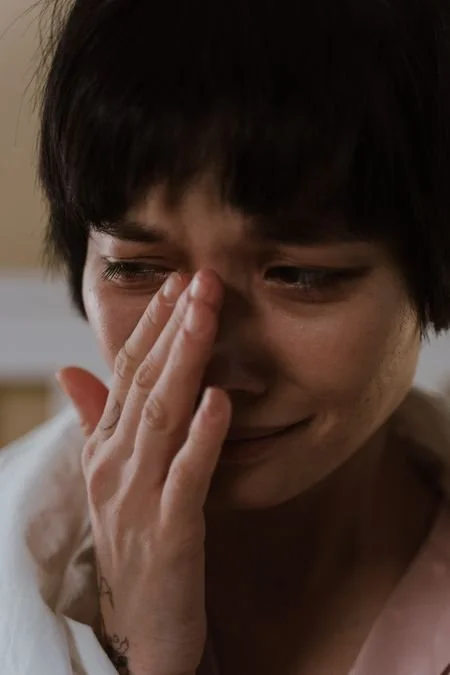
“Don’t deny its (grief) existence and respect the process” - Source Unknown
“Grief is love but that has no home. Now turn that love inward and love yourself” - Source Unknown
“There is no wrong or right way to grieve. You just do.” - Source Unknown
Grief and loss is easy on paper to learn about as a mental health clinician, but it is extremely difficult to hold the space for someone going through the thick of it. I’m just being honest. There is nothing that I can do to take away the pain that a client is experiencing. The best thing I can do is be a calming and safe presence for them so that they don’t feel like they are alone.
Five Stages of Grief and Loss by Elizabeth Kubler Ross
Denial
Denial or shock is one of the first parts of grief that sets in when we’ve experienced loss. During this period, life feels overwhelming, worthless, and even meaningless. We can experience numbness to the pain, feel dull, or it’s as if we are in limbo and time has stopped. We ask ourselves if we can ever make it out of this alive, what’s the point of all this, or even question if there’s even anything that we can live for anymore. Denial is a normal part of grief. It does not mean you don’t care about this thing or person you lost. The brain does this as a key survival mechanism to only let in as much pain as we can handle.
Anger
Anger tends to get a bad rep and it’s often told to be suppressed because it’s a “bad” thing. I don’t see it that way. Anger also comes as a result of pain. I see anger as the energy we need to protect something that is important to us. It also gives us a sense of direction when grief sets in. Rather than being in a giant room that is dark and hard to see, anger gives us a glimmer of light to see where to go next. You may question your religious faith, you may get frustrated at someone who is no longer the same person because of this grief, and/or you might be angry at the system that created barriers that may have led to this painful loss. Whatever it is, this anger is appropriate for healing and it’s important not to try and suppress this energy.
Bargaining
This part of grief can be hard. Guilt is a frequent visitor. Shame, the belief that we are bad, may also set in. We ask a lot of “what if” questions, we may plead with the higher powers we will change our behaviors if our loved one is spared, and it’s common for people to say “if only I had done x, y, and z”. It’s another form of grief to try and make sense of it. Our brain is not good with having blank spaces. It tries to fill those gaps with any sort of meaning. With death, there is a huge gap that we cannot just let exist, so we try to find control of it by seeing if there was something we could’ve done.
Depression

I want to be clear that this type of depression is not a sign of a mental health condition. Losing someone and being sent into grief is depressing. It would be atypical if one were not feeling depressed in a situation like this. This part of grief may feel like it will last forever. We isolate ourselves, we withdraw from our loved ones, and we even question if life is worth continuing. The depression state within grief is not something that needs to be fixed. Like the other parts of grief, we cannot rush through it.
Acceptance
This part of grief can incorrectly be interpreted as “everything is okay now”. That is not the case. There are many people who have come to terms that their loved one is physically gone, but still experience pain. Over time, we slowly learn to re-enter and reintegrate ourselves back into life. We find acceptance in the fact that we can keep going. It’s just that the thing or person we lost won’t be coming along with us. We even begin to enjoy life again. This can be accompanied by guilt or betrayal but know that both the reality of loss and your enjoyment of life can coexist. Your ability to experience moments of joy does not mean you don’t care about the person you lost.
Final Thoughts
I want to remind you that just because you moved through denial, anger, bargaining, depression, and acceptance doesn’t mean that you won’t ever go back or that you’ve somehow “accomplished” grief. It doesn’t work that way. This is not a Super Mario video game where you beat the stage and you don’t return. Grief is not linear. It ebbs and flows between all parts mentioned above. Even if you get to a place of acceptance, you may find yourself on one special holiday back in depression or bargaining. That is totally acceptable. It’s important to make room for your feelings and emotions. In doing so, you are processing the grief, and eventually you can break out of isolation, reach out to friends, learn to enjoy parts of yourself and previously enjoyed hobbies, and you begin to adjust.
Seek An Individual Therapist in Portland, Oregon or Los Angeles, California
It is not wrong to ask for help, especially when going through grief and loss. If you are seeking therapy for the first time or thinking about coming back after a long stint, consider reaching out for culturally sensitive and trauma-informed care.
I offer face-to-face sessions for anyone near Portland, Tigard, Beaverton, and Lake Oswego, as well as online therapy for anyone in the state of Oregon or California. Navigating your mental health journey can be challenging, but I’m here to support you along the way.
Here are steps begin:
Fill out this contact form to get connected with me.
Schedule a free consultation call.
Begin your healing journey.